Kazimir: Long Conflict with Iran Could Increase Inflation and Unemployment
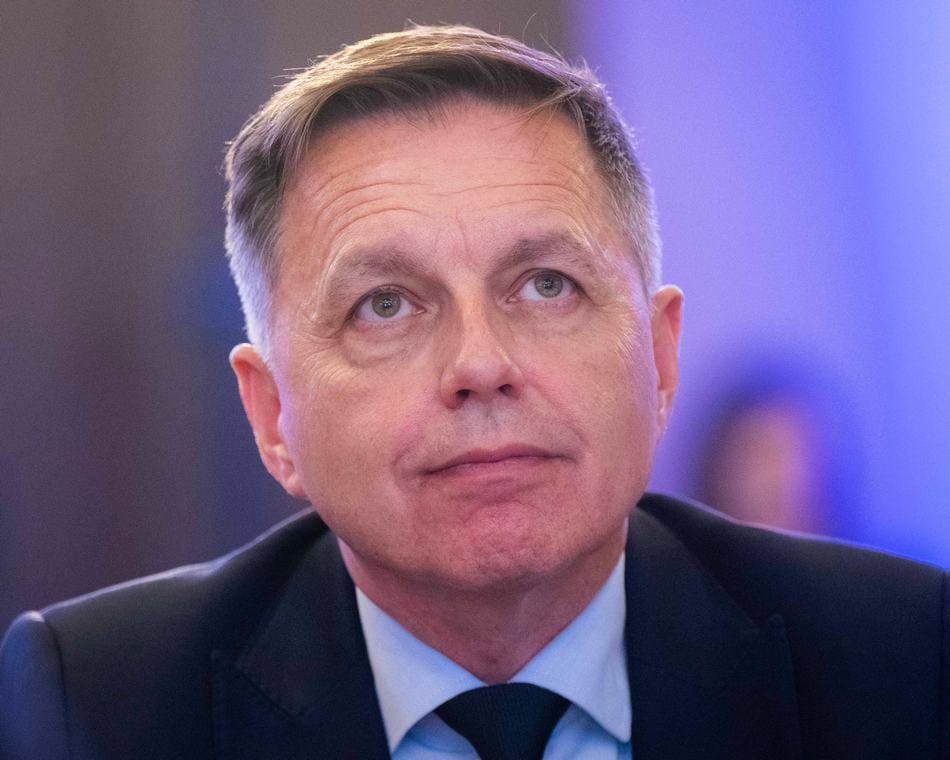
Bratislava, 24 April (TASR) - If the conflict with Iran were to escalate further and continue for weeks or months, it would pose a threat of slowing economic growth, a rise in inflation up to 7 percent, and the loss of tens of thousands of jobs, governor of the Slovak central bank (NBS) Peter Kazimir stated in his address to delegates at the annual congress of the National Union of Employers (RUZ) on Friday.
"The uncertain end to the war in the Middle East has heightened uncertainty in the global economy and poses a risk to our country as well. Meanwhile, information prior to the outbreak of the conflict suggested that Slovakia's economic growth could be slightly better than we had originally expected. However, the war has overshadowed the promising developments in the European economy and the Slovak labour market from the turn of the year. As a result of the conflict, energy commodity prices on financial markets have begun to rise dramatically, and we are all seeing this. A positive aspect is that the rise in oil and natural gas prices is so far weaker than it was after the Russian invasion of Ukraine," he said.
However, the governor added that the conflict in Iran could still slow down the global economy significantly. "The longer the conflict lasts and the greater the damage it causes, the stronger its negative impact will be on both the global and Slovak economies. And that is a concern for everyone, not just us. It is precisely in such an environment that the ability of companies and businesses to manage these situations plays a key role. Slovakia is feeling this pressure very intensely, as our spring forecast clearly shows," he noted.
"According to this forecast, economic growth is hovering at around half a percent; it is weak and driven almost exclusively by foreign demand. Domestic consumption remains subdued, companies are postponing investments, people are saving, inflation is near 4 percent, and while nominal salaries are rising, inflation will absorb almost all of this growth, so real salaries are hovering at around zero [percent] this year," he pointed out.
"I've spoken about the need to consider scenarios. It would be irresponsible not to have them, and that's why there's also an even worse negative scenario. In that, we consider a situation in which the conflict with Iran would escalate further, lasting for weeks and months. This carries with it the threat of a decline in growth, the threat of inflation rising to 7 percent, and the loss of tens of thousands of jobs," he emphasised. According to Kazimir, this is a very grim scenario, however, and he expects that the actual outcome will be better.