V4 Health Ministers to Boost Cooperation in Medicines and Biotechnology
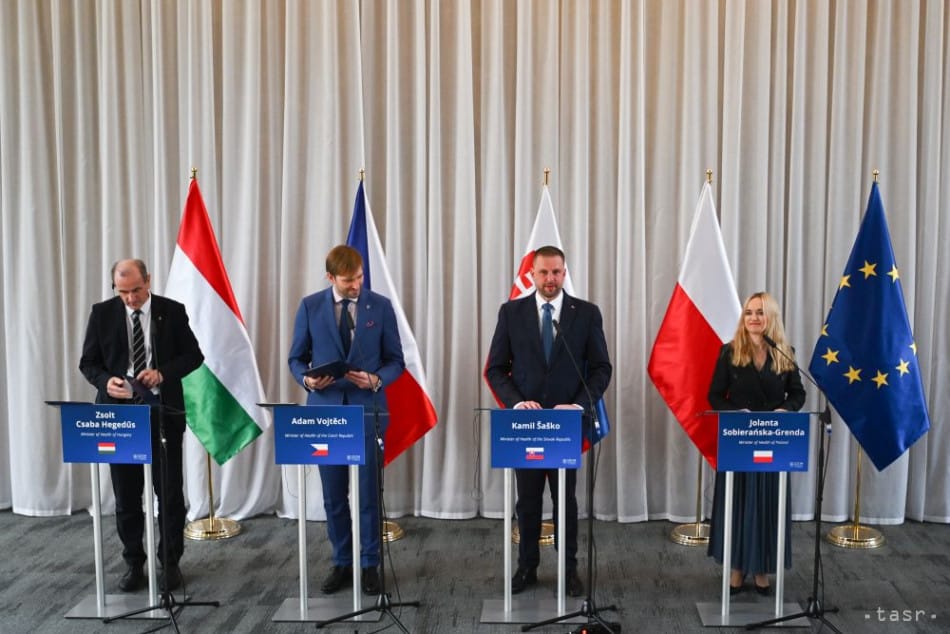
Piestany, 20 November (TASR) - The health ministers of the Visegrad Four (V4) countries (the Czech Republic, Hungary, Poland, Slovakia) have agreed to strengthen regional cooperation in health care, focusing on the availability of critically important medicines, developing biotechnology, supporting mental health, prevention and strengthening the resilience of health-care systems, according to a joint statement signed by the ministers in Piestany (Trnava region) on Friday.
Slovak Health Minister Kamil Sasko (Voice-SD) emphasised that the countries face similar challenges. "We have a shortage of nurses, children need more protection, and patients need the assurance that, for example, the medicine that they need will be available at the chemist's. We've agreed that we'll tackle all these challenges together," he said, adding that he also considers it important for mental health support to be brought closer to children - in schools, outpatient clinics and communities.
The document emphasises the need for closer cooperation in ensuring supplies of medicines, timely exchanges of information and a coordinated approach in the event of shortages. The ministers also support closer cooperation between medicine regulatory authorities, particularly in exchanges of information on inspections and quality issues.
The V4 countries also want to harness the region's scientific and research potential to develop the European biotechnology ecosystem. "This region really can be a hub for innovation. We have high-calibre scientists, research infrastructure and a tradition of pharmaceutical manufacturing. We must join forces, because together we'll be stronger," said Czech Health Minister Adam Vojtech.
Polish Health Minister Jolanta Sobieranska-Grenda emphasised that innovation must bring tangible benefits to patients. "New treatment methods must be safe, effective and accessible to those who need them," she said, adding that she also considers the mutual sharing of experience and best practices to be important.
The ministers intend to pay particular attention to the mental health of children and young people, especially prevention, early detection of problems and the availability of community care. Hungarian Health Minister Zsolt Csaba Hegedus highlighted the importance of mutual learning. "When one of us finds a good solution, it's worth adopting it," he said, stressing the need for long-term funding of successful mental health programmes in order to ensure that their results aren't lost once project funding ends.