ZMOS and SK8 Unveil Their Reform Plan Proposal
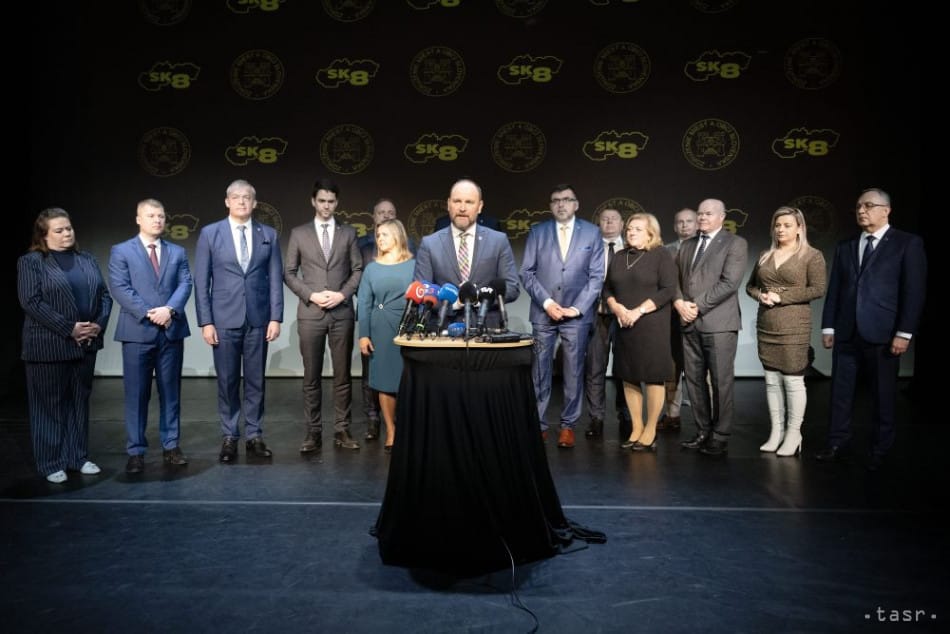
Bratislava, 13 March (TASR) – The Association of Towns and Villages of Slovakia (ZMOS) and the Association of Self-Governing Regions of Slovakia (SK8) presented a joint draft on public administration reform entitled 'Regional Self-Government as a Stable and Strong Partner of the State' at their joint press conference on Friday.
The document outlines their shared demands for the necessary reform of public administration. They agreed on principles and steps needed to modernise and improve the efficiency of services for citizens, and, for instance, call for the right of veto. The two organisations will subsequently approach state representatives for talks in order to find common ground and begin preparations for the reform itself.
"We believe that in this case it is not only about asking for financial resources. It is not only about discussing how to redraw maps. We are asking and saying that we have the ambition to improve the functioning of public administration.
We have the ambition and expert views on how municipalities, towns, regions and the whole of Slovakia could function better," said SK8 chair and Trnava governor Jozef Viskupic.
The joint material, the result of two years of expert dialogue, represents, according to local authorities, a comprehensive vision of how to transform public administration into a modern, lean and functional system based on the needs of residents in the regions. They have long warned that the current model of the distribution of powers and financing is unsustainable.
The reform is also important to ensure that local authorities – regions, towns and municipalities – are a "proud and determined partner", including in relation to the government as well as the Slovak Union of Towns.
The basis is therefore good decentralisation, bolstering the powers of local governments and more funding, especially stable financing.
The aim of the changes is to create a lean and thus decentralised state that would transfer the implementation of sectoral policies such as education, social services, culture and regional development directly to self-governing entities.
The proposal envisages constitutional recognition of the status of local authorities, the removal of overlaps with state administration and the introduction of a regional integrated management model.
At the same time, it would bring stability through predictable multi-source financing and mandatory inter-municipal cooperation.
Local authorities are also demanding the right of veto, meaning the possibility to return a "bad" law, an unfinished law or a law adopted in a fast-track legislative procedure back to Parliament so that it can be further discussed and its flaws corrected.
They point out that decisions with a fundamental impact on the functioning of local authorities and the quality of services provided are often taken.
"We are the hands and feet of the welfare state. Yet despite this great responsibility, we do not have sufficient rights and we do not have a sufficient position in the system of power," warned SK8 vice-chair and Banska Bystrica governor Ondrej Lunter, adding that this change should not cost the state any money.
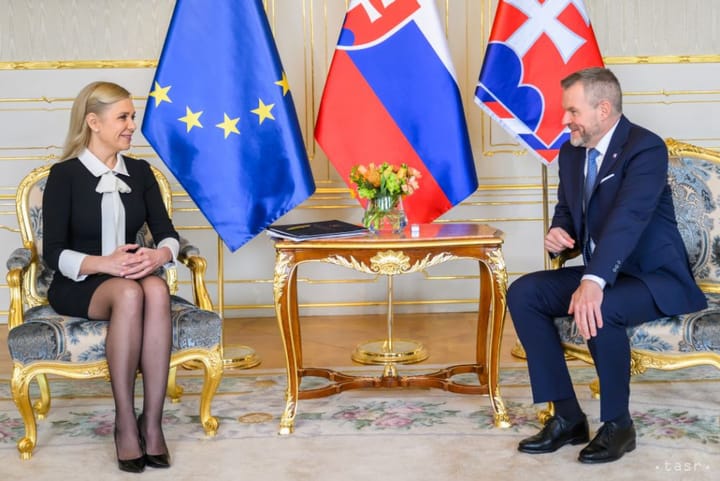
The document has already been sent to President Peter Pellegrini, House Chair Richard Rasi (Voice-SD) and Prime Minister Robert Fico (Smer-SD). It is also to be delivered to coalition and opposition parties.
They expect the state to open substantive dialogue aimed at approving a reform that would bring a higher quality of life for residents in all parts of Slovakia.