Fico: Our V4 Presidency to Put Emphasis on International Law and Peace
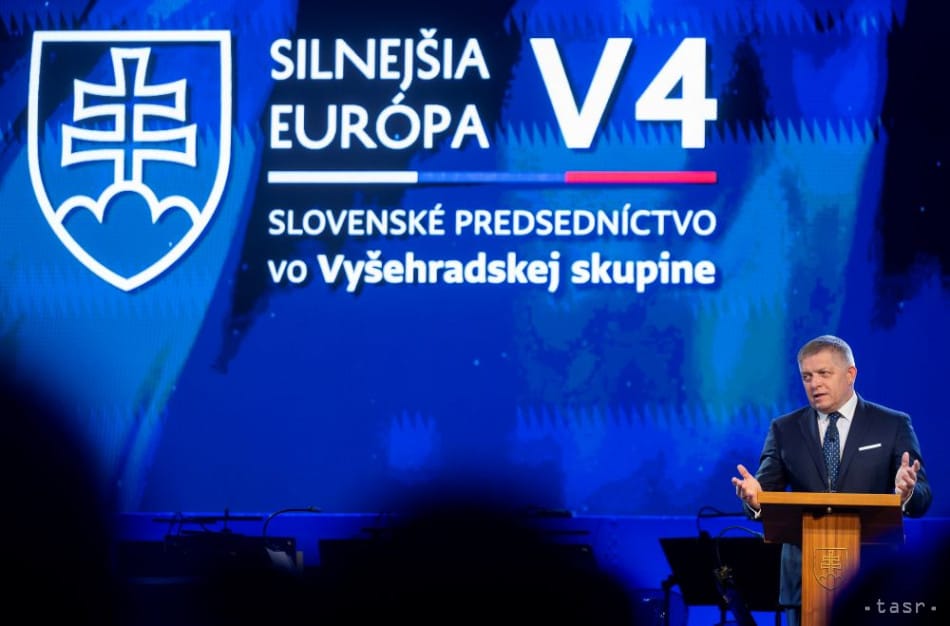
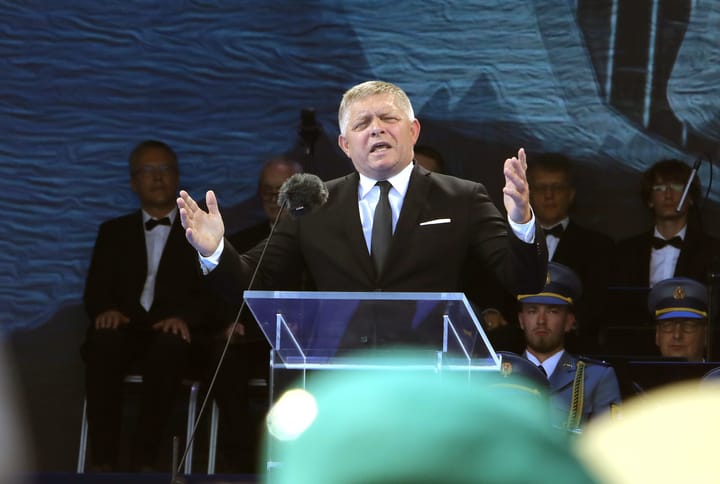
Bratislava, 1 July (TASR) - The Slovak government wants to begin its presidency of the Visegrad Group (V4: Czech Republic, Hungary, Poland, Slovakia) guided by the principles of strict adherence to international law, non-interference in the internal affairs of other countries, and respect for the paths other nations choose in managing their domestic affairs, Prime Minister Robert Fico declared in his address marking the launch of Slovakia's V4 presidency on Wednesday.
Fico stated that the V4 countries aim to once again become a strong regional grouping and underlined that promoting peace is also among the key priorities of Slovakia's presidency.
The prime minister pointed out that Slovakia is assuming the presidency at a difficult geopolitical moment, when the principles of international law and the foundations of the international order are being undermined.
"The Slovak government enters this presidency with clear principles. First, strict respect for international law; second, non-interference in the internal affairs of other countries; and third, respect for the path other countries choose in managing their own internal affairs. As prime minister, I will follow these principles in leading this format during 2026 and 2027," he said in an address before a concert marking the start of Slovakia's V4 presidency.
Alongside the four official priorities of the Slovak presidency, Fico identified peace as a fifth priority.
"Although I belong to a very small group of prime ministers within the European Union who support dialogue, while the vast majority of EU member states support the war in Ukraine, I will do everything possible to ensure that the V4 primarily conveys messages of peace," he said, adding that, in his view, the Western world is effectively at war with Russia.
Competitiveness is also among the presidency's priorities. Fico said Europe has fallen behind other regions in this area and argued that the EU's most pressing competitiveness challenge is high energy prices.
"I believe the V4 prime ministers will soon meet the German chancellor and that the main topic of those talks will be high energy prices. We must address them," he said.
On EU enlargement, Fico reiterated that Montenegro, Albania and Serbia are the three countries best prepared for accession. He said they could bring "common sense and fresh blood" to the bloc. Slovakia respects Ukraine's ambition to join the EU, he added, but opposed any shortcuts or special exemptions in the accession process.
The prime minister also referred to the EU's multiannual financial framework, saying V4 partners share closely aligned positions on cohesion policy, reducing regional disparities and the Common Agricultural Policy.
Speaking about people-to-people ties, Fico highlighted the long-standing role of the Visegrad Fund.
"We lived through a period of darkness," Fico said, referring to the years when the V4 had been weakened and, in his view, there had been efforts to dismantle regional cooperation.
"For several years, V4 meetings were little more than formalities. We met without results, and our positions amounted to empty political declarations instead of coordinated common policies," he said.
He claimed that the V4 had previously achieved significant successes in European policymaking, citing its joint opposition to mandatory migrant quotas. Fico welcomed the willingness expressed by all four V4 prime ministers at a recent meeting to revive cooperation within the grouping. "We were strong, then we practically ceased to exist, and now we want to be strong again," he concluded.