Gov't Rejects European Commission's Assessment of Corruption Prosecution
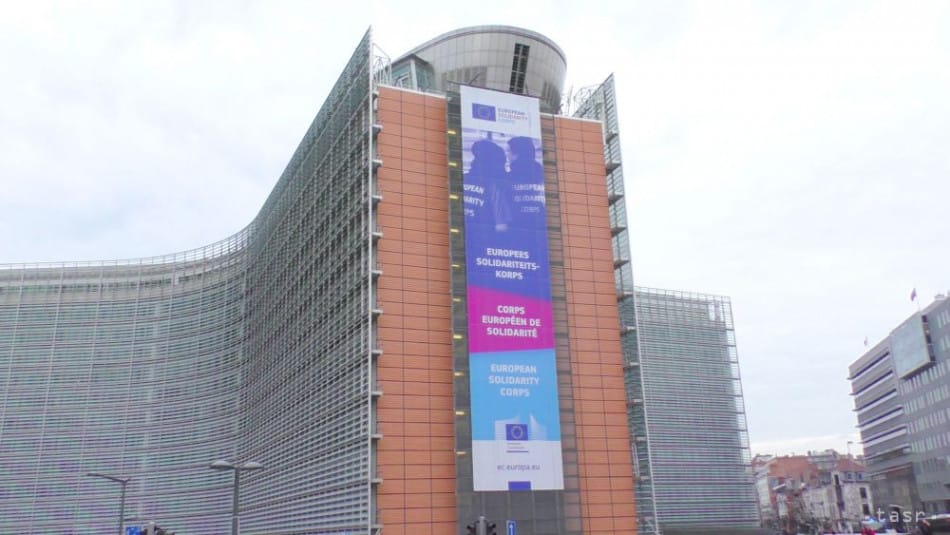
Bratislava, 17 July (TASR) - The Slovak government has taken note of the European Commission's report on the state of the rule of law in Slovakia, and it welcomes the Commission's positive assessment of the implementation of several recommendations from last year's report as well as its acknowledgement of progress in a number of areas, TASR learnt from the Government's Office press department on Friday.
However, the government rejects the European Commission's assessment regarding the prosecution of high-level corruption cases, finding it biased and unobjective. It stressed that criminal proceedings are fully in the hands of independent investigators and prosecutors and that the government has no influence over them.
"The Slovak government has no influence over the prosecution of corruption or any other criminal activity. The values underpinning Slovakia as a democratic state governed by the rule of law prevent the executive or legislative branches from interfering in the remit of law-enforcement authorities or actively influencing investigations into 'live' criminal cases, as happened in Slovakia between 2020 and 2023.
Criminal prosecutions are fully in the hands of independent investigators and prosecutors. Slovak legislation meets European standards in this area, and we therefore consider the report's assessment in this area to be an attempt at undue interference in the independence of the law-enforcement authorities," stated the cabinet.
In this context, the government rejected the misuse of criminal law for political purposes. It claimed that this occurred under the previous government between 2020 and 2023, referring to what it described as the unjustified criminal persecution of representatives of the-then opposition, as well as unlawful charges and detention during that period.
"The Slovak government regrets that the European Commission was informed about all serious breaches of rule of law principles in Slovakia between 2020 and 2023 but for purely utilitarian political reasons took no action against the government in power at the time," it added, stating that serious procedural shortcomings during that period have been confirmed in several judgments by the European Court of Human Rights.
The cabinet therefore described the report’s assessment in this area as biased and not objective. "There is no clear and pre-established scale of specific, objective and measurable criteria that would be assessed equally, transparently and subject to review across all European Union-member states," it said.
The government believes that the Commission applies a double standard. "It clearly overlooks serious breaches of rule-of-law principles in other EU-member states, which significantly reduces the credibility of the European Commission as an objective assessor of the quality of the rule of law in EU countries," it added.
The cabinet nevertheless welcomed the Commission's positive assessment of the implementation of several recommendations from last year’s report. "Slovakia received no new recommendations, while the existing recommendations are those issued to the previous government. In its new report, the Commission notes significant progress or progress in several areas, which is a result of the activities of the current government," it claimed.
The government pointed out that the European Commission has noted positive developments; for example, in relation to introducing safeguards regarding the dismissal of members of the Judicial Council, a proposal to abolish the criminal offence of bending the law, and a reduction in the length of court proceedings.
"With regard to increasing the protection of journalists, the Commission positively assessed the transposition of the so-called anti-SLAPP directive. At the same time, the Slovak government said that it will address shortcomings in other areas and that it's prepared to adopt legislative and non-legislative measures to eliminate them,” the press department added.
The government also praised intensive communication between the European Commission and Slovakia during the preparation of the report. It positively assessed improvements in the methodology, although it still has certain reservations. For example, it called on the Commission to verify all information contained in the report multiple times, including through repeated consultations with public authorities.