Pellegrini: Slovakia Has Become One of NATO's Leading Ammunition Producers
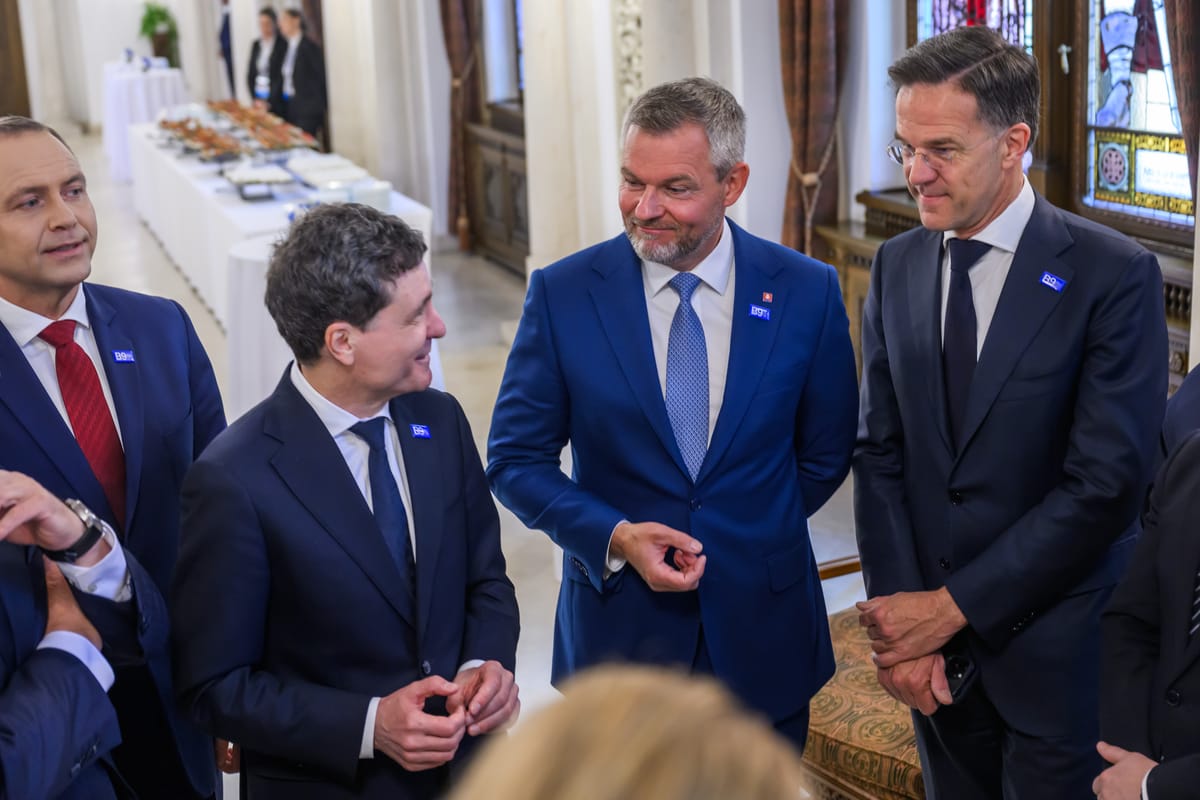
Bucharest, 13 May (TASR) - Through investments in the arms industry, Slovakia has become one of the leading ammunition producers within NATO, stated President Peter Pellegrini following a meeting of representatives of the Bucharest Nine (B9) countries, TASR learnt from its special correspondent in Bucharest on Wednesday.
In Pellegrini's opinion, the Alliance is and will continue to be united, even though there seems to be tension between member states and the USA.
"We, of course, need to strengthen the European pillar within NATO, not to act as a separate entity, but to bolster responsibility for defence and enhance our capabilities to defend ourselves within NATO. This is, naturally, linked to the need for increased defence spending," he stated.
Pellegrini informed the representatives of the B9 and Nordic countries that Slovakia "is preparing and will shortly approve a new, adjusted long-term plan for building up the Slovak Armed Forces, which will reflect the need for a gradual increase in spending for both the arms industry and dual-use projects".
However, according to him, the fact that "manufacturing capacities are inadequate and cannot deliver everything NATO armies need" is a significant issue, as "today, even if you had vast billions available, even if national budgets allowed for a rapid increase in military spending, it's not realistically possible to use these funds".
In this context, Slovakia has taken a major step forward by investing heavily in its arms industry, which now accounts for nearly 3 percent of GDP, making it one of the leading ammunitions producers within NATO. Slovakia's commercial supplies of ammunition to Ukraine "are counted in millions, and that number will be increasing in the future". He said that Ukraine currently possesses the best skills and knowledge of modern warfare and can offer its know-how to neighbouring countries.
In terms of the percentage of GDP allocated to defence spending, Pellegrini said that it's equally important to know how much of it goes on modernising the armed forces rather than just maintaining them, highlighting the fact that in Slovakia, such modernisation accounts for 34 percent.
According to him, Slovakia is in many areas ahead of its partners in NATO, but it isn't in a position to "multiply its defence spending overnight". For this reason, Slovakia has supported an increase spread over the next ten years, he said, stressing that the country is complying with its 2-percent-of-GDP commitment.
"We can't compete with countries like Poland, which will reach nearly 5 percent this year, or the Baltic states, which are at 5 percent already. We have ten years, and I believe that by investing money gradually but wisely, we'll reach those percentages within ten years as well," stated Pellegrini.
In addition to the Barak air-defence system, Slovakia also needs a cheaper method of protection, such as drones capable of eliminating other drones, he said, adding that Slovakia is already manufacturing its own drones that can be deployed in such operations.
Pellegrini reiterated the need for legislative changes to allow the armed forces to respond effectively to threats even in peacetime. He also spoke with partners about the need to continue NATO missions, such as the KFOR mission in the Western Balkans, due to the "insufficiently settled" situation on the Kosovo-Serbia border.