President: I Wouldn't Reappoint Kazimir Until Court Ruling
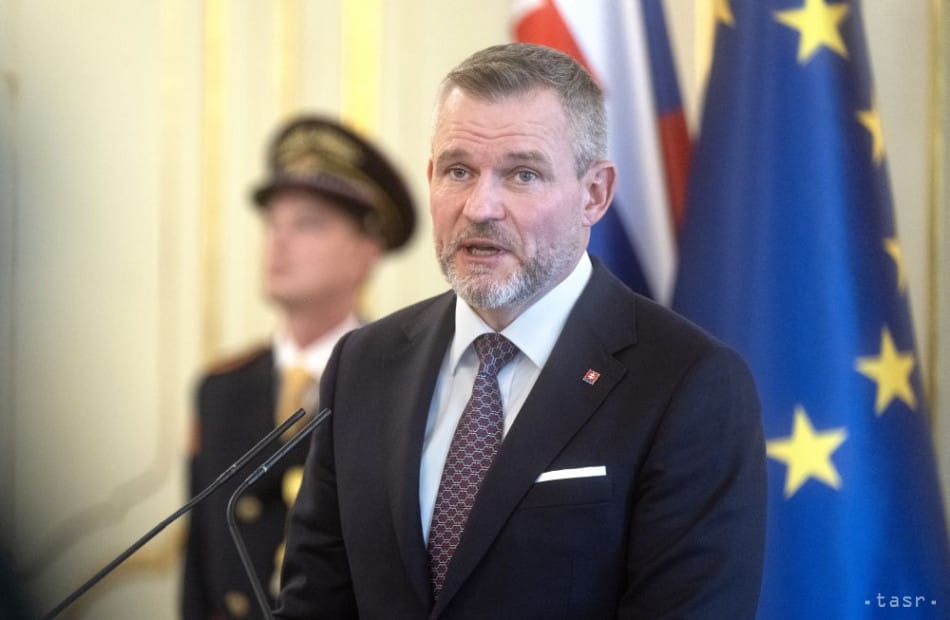
Bratislava, 27 October (TASR) - I would take the same approach to other nominations for public office as I have in the case of Filip Kuffa, and this also applies to the possible reappointment of Peter Kazimir as governor of the Slovak Central Bank (NBS), President Peter Pellegrini declared on Tuesday.
Pellegrini insisted that he wanted to apply the same standard to all nominations.
"Even if Parliament were to approve Peter Kazimir as the NBS governor, given that court proceedings are currently under way against him, I can state here and now that I would not consider the nomination until a final court ruling had established his innocence. Until then, I would not appoint him to a second term as governor. At the same time, if the governor is convicted by a final court ruling, I will remove him from his post as NBS governor as president," Pellegrini said.
Kazimir's first term as NBS governor expired in June last year. He remains in office until a successor is appointed, but the governing coalition has yet to reach an agreement on a candidate. The Voice-SD party has long backed Kazimir for a second term, while Smer-SD, the largest governing party, has refused to support him.
In May last year, the Specialised Criminal Court in Pezinok found the former finance minister and NBS governor guilty of bribery. It imposed a fine of €200,000, with a one-year prison sentence as an alternative in the event of non-payment. Kazimir appealed against the verdict. He considers the proceedings, as well as the trial itself, unlawful and maintains that he committed no criminal offence.
Pellegrini said on Tuesday that he would refer the proposed appointment of Filip Kuffa as environment minister to the Constitutional Court. He will not appoint Kuffa until he has received the court's interpretation.
In his submission, Pellegrini is asking the court to establish whether the Constitution gives the president a legally relevant opportunity to assess a proposed government member on the basis of information lawfully available to him as head of state, and to decide whether to accept or reject the prime minister's nomination.