Susko Stands Behind Criminal Policy Changes from 2024
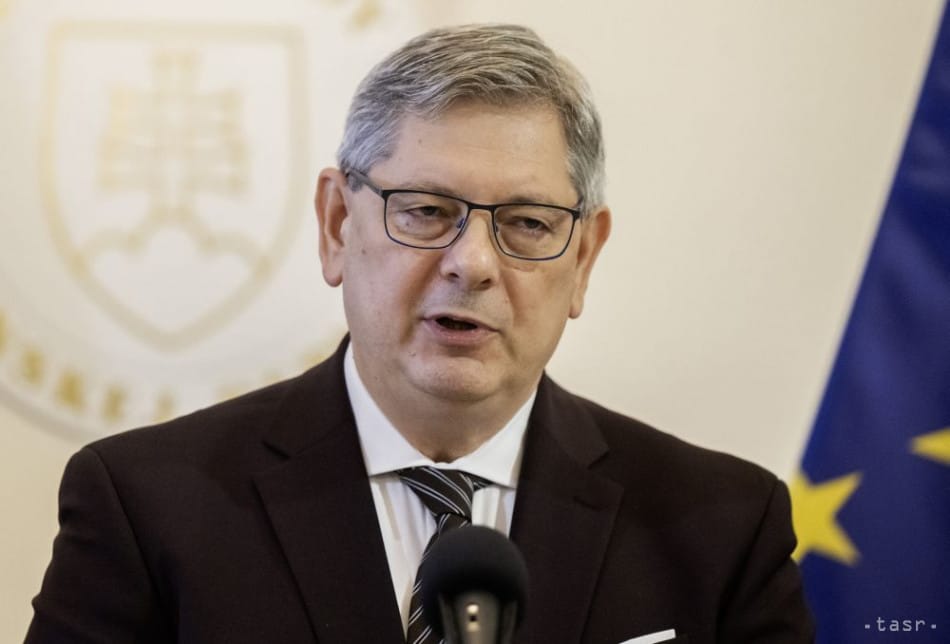
Bratislava, 12 February (TASR) - Justice Minister Boris Susko (Smer-SD) stands by the changes in the state's criminal policy introduced in 2024.
Susko said this Parliament during Thursday's question time in response to a question from opposition MP Beata Jurik (Progressive Slovakia) on whether he perceives the sharp decline in the investigation of corruption offences, a drop in the Corruption Perceptions Index ranking and the failure to prosecute more than 2,000 tax crimes as his personal responsibility.
The MP believes that these developments occurred as a result of the government's amendment to the Criminal Code.
"By changing the state's criminal policy, we wanted to ensure that criminal law serves as a last resort, meaning that it should be used only when other forms of penalties are insufficient to address unlawful conduct, including in terms of the proportionality of the sanction in relation to the damage caused," he stated.
The minister also commented on the Corruption Perceptions Index compiled by Transparency International. He pointed out that it's a survey among respondents on how they subjectively perceive the situation.
"If words such as catastrophe, breakdown and collapse are used in the public space for months, we shouldn't be surprised that perceptions are negative," said Susko.
However, he stressed that the state's criminal policy shouldn't be managed according to feelings but must be guided by legal principles, effectiveness and real results. He also noted that Slovakia has dropped by two places, not to the bottom of the ranking.
"If the situation were as dramatic as you describe, we would be talking about dozens of places, not a marginal shift," Susko told the opposition MP.
The minister also addressed tax offences. According to him, the new rules haven't brought impunity.
"In the case of tax offences, it's possible to impose sanctions in the form of high financial penalties. This doesn't mean impunity. It's merely a change of regime from criminal prosecution to another type of sanction within the options available to the state," he added.
On Tuesday (10 February), Transparency International Slovakia (TIS) presented the global Corruption Perceptions Index. Slovakia ranked 61st out of 182 countries, down two places year on year. It scored 48 out of a possible 100 points. The higher the score, the lower the level of corruption in a country. The difference between Slovakia and the European Union average in the ranking is 14 points (48 compared with 62).